The human kidney can be damaged from a number of causes resulting in a patient’s inability to filter toxins (i.e. urea) from the body which could result in death. Complete kidney failure is usually first treated with dialysis which “cleans” the blood.
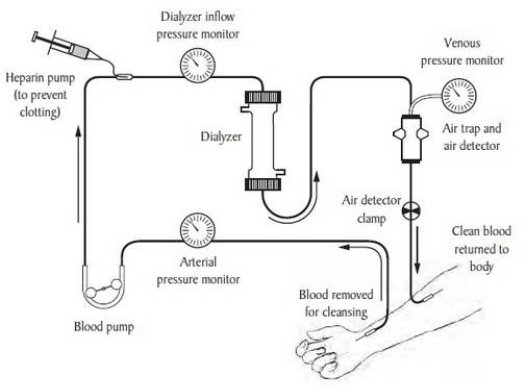
Figure 1: Dialysis. The “dialyzer” is a glass container that has 3 main components: (1) blood percolating through to be cleaned; (2) a dividing membrane; and (3) the dialysate. The latter is liquid containing chemicals used to draw fluids and toxins out of the bloodstream and supply electrolytes and other chemicals to the bloodstream. (kidney.niddk.nih.gov) Considering the information provided, which of the following is NOT consistent with the process of dialysis?
Select an option, then click Submit answer.
-
○
The membrane in the dialyzer separating the dialysate and the blood must be semipermeable.
-
○
The concentration of toxins in the dialysate must increase during dialysis.
-
○
The concentration of glucose and vital minerals in the dialysate must be similar to that of the patient’s blood.
-
○
Excessive minerals and toxins cross the membrane in the dialyzer by osmosis.