ASCP-MLT MEDICAL LABORATORY TECHNICIAN - MLT(ASCP)

Loading demo links...

Showing 16–18 of 20 questions

Question 16

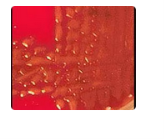
Assuming an alpha hemolytic reaction (not well seen in the image), viridans streptococcus and S. pneumoniae are the two possible responses. However, these colonies are far too mucoid for viridans streptococci; therefore, S. pneumoniae is the most likely choice. Also, the colonies are much too large and the hemolytic reaction is wrong for S. pyogenes or S. agalactiae.

A patient was admitted to the hospital recently with an obvious infection. A sputum specimen was submitted and the microbiologist inoculated it to sheep blood agar. Based on the colony morphology and the alpha hemolysis seen in the image to the right, the most likely identification is:
Select an option, then click Submit answer.

  • Streptococcus pneumoniae

  • viridans streptococcus

  • Streptococcus pyogenes

  • Streptococcus agalactiae

Question 17

This drawing depicts beta thalassemia minor B+/B. In Beta thalassemia minor B+/B, one beta gene locus is partially deleted or inactive.

Hematology

This drawing depicts which beta chain genotype ?

Select an option, then click Submit answer.

  • Beta thalassemia minor

  • Beta thalassemia intermedia

  • Beta thalassemia major

  • Delta-beta thalassemia minor

Question 18

Alkaline phosphatase, or ALP, is present in kidneys, liver, intestines, bone, and the placenta. The liver makes the largest amount of ALP. Some of the conditions associated with increased levels of ALP include: damaged liver cells, rapid bone growth (during puberty), bone diseases, or a disease that affects how much calcium is in the blood (hyperparathyroidism), and vitamin D deficiency.

Chemistry

Isoenzymes of alkaline phosphatase occur in:

Select an option, then click Submit answer.

  • Kidney, bone, intestines, liver

  • Bone, brain, liver, pancreas

  • Liver, brain, spleen, intestines

  • Brain, kidney, intestines, bone