SIMULATION
Ota L'Abbe, a supervisor at an investment research firm, has asked one of the junior analysts, Andreas Hally, to draft a research report dealing with various accounting issues.
Excerpts from the request are as follows:
• “There's an exciting company that we're starting to follow these days. It's called Snowboards andSkateboards, Inc. They are a multinational company with operations and a head office based in the resort town of Whistler in western Canada. However, they also have a significant subsidiary located in the United States."
• "Look at the subsidiary and deal with some foreign currency issues including the specificdifferences between the temporal and all-current methods of translation, as well as the effect on financial ratios."
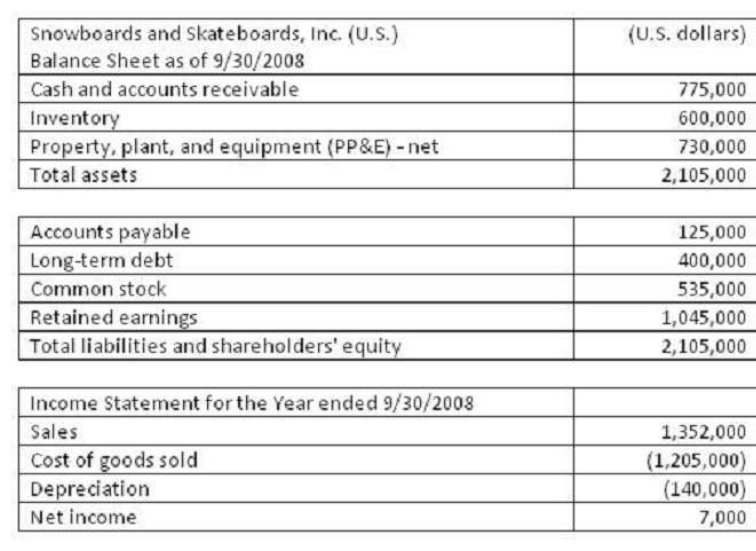
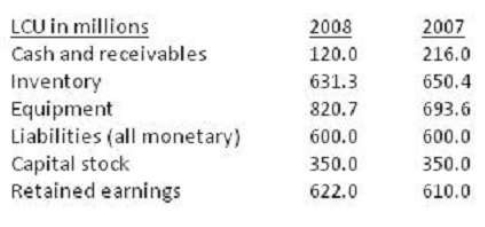
• "The attached file contains the September 30, 2008, financial statements of the U.S. subsidiary.Translate the financial statements into Canadian dollars in a manner consistent with U.S. GAAP." The following are statements from the research report subsequently written by Hally:
Statement 1: Subsidiaries whose operations are well integrated with the parent will use the allcurrent method of translation.
Statement 2: Self-contained, independent subsidiaries whose operating, investing, and financing activities are primarily located in the local market will use the temporal method of translation.
Other information to be considered
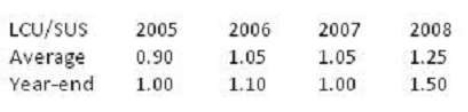
•  Exchange rates (CAD/USD)
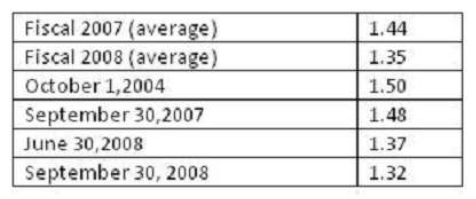
• Beginning inventory for fiscal 2008 had been purchased evenly throughout fiscal 2007. Thecompany uses the FIFO inventory value method.
• Dividends of USD 25,000 were paid to the shareholders on June 30, 2008.
• All of the remaining inventory at the end of fiscal 2008 was purchased evenly throughout fiscal2008.
• All of the PP&E was purchased, and all of the common equity was issued at the inception of thecompany on October 1, 2004. No new PP&E has been acquired, and no additional common stock has been issued since then. However, they plan to purchase new PP&E starting in fiscal 2009.
• The beginning retained earnings balance for fiscal 2008 was CAD 1,550,000.
• The accounts payable on the fiscal 2008 balance sheet were all incurred on June 30, 2008.
• The U.S. subsidiary's operations are highly integrated with the main operations in Canada.
• The remeasured inventory for 2008 using the temporal method is CAD 810,000.
• All monetary asset and liability balances are the same as they were at the end of the 2007 fiscalyear, except that long-term debt was USD 467,700.
• Costs of goods sold under the temporal method in 2008 is CAD 1,667,250.
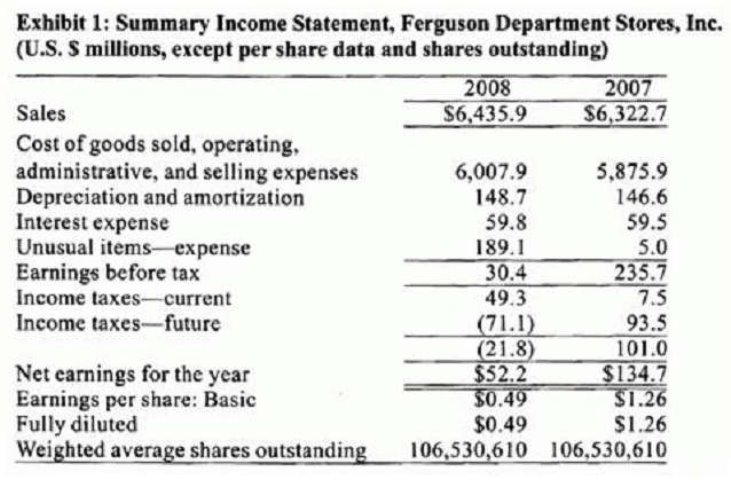
Suppose the parent uses the all-current method to translate the subsidiary for fiscal 2008. Will return on assets and net profit margin in U.S. dollars before translation be the same as, or different than, the translated Canadian dollar ratios?
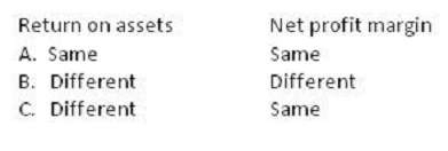
Answer is in the explanation below.

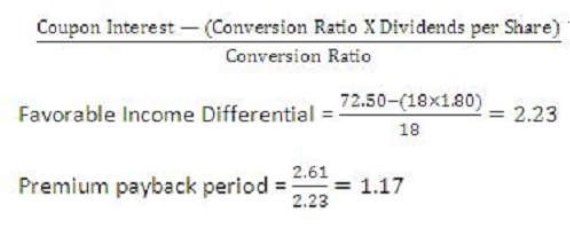
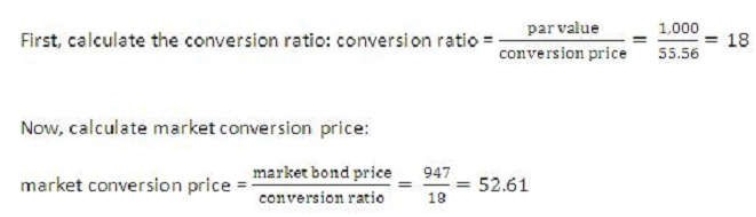 MediSoft Inc. develops and distributes high-tech medical software used in hospitals and clinics across the United States and Canada. The firm's software provides an integrated solution to monitoring, analyzing, and managing output from a variety of diagnostic medical equipment including MRls, CT scans, and EKG machines. MediSoft has grown rapidly since its inception ten years ago, averaging 25% growth in sales over the last decade. The company went public three years ago. Twelve months after their IPO, MediSoft made two semiannual coupon bond offerings, the first of which was a convertible bond. At the time of issuance, the convertible bond had a coupon rate of 7.25%, par value of $1,000, a conversion price of $55.56, and ten years until maturity. Two years after issuance, the bond became callable at 102% of par value. Soon after the issuance of the convertible bond, the company issued another series of bonds which were putable, but contained no conversion or call features. The putable bonds were issued with a coupon of 8.0%, par value of $1,000, and 15 years until maturity. One year after their issuance, the put feature of the putable bonds became active, allowing the bonds to be put at a price of 95% of par value, and increasing linearly over five years to 100% of par value. MediSoft's convertible bonds are now trading in the market for a price of $947 with an estimated straight value of $917. The company's putable bonds are trading at a price of $1,052. Volatility in the price of MediSoft's common stock has been relatively high over the last few months. Currently the stock is priced at $50 on the New York Stock Exchange and is expected to continue its annual dividend in the amount of $1.80 per share.

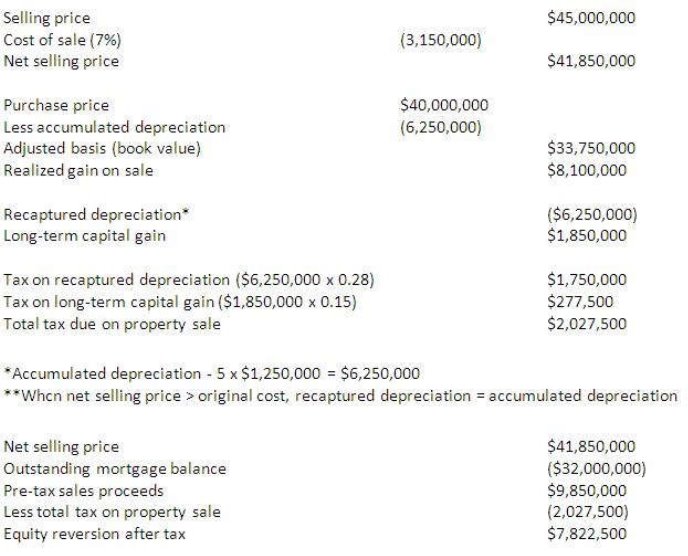
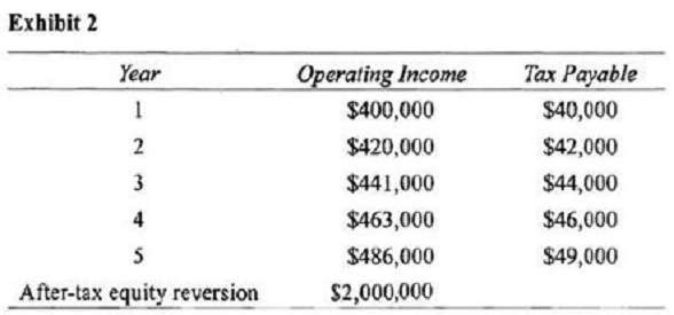
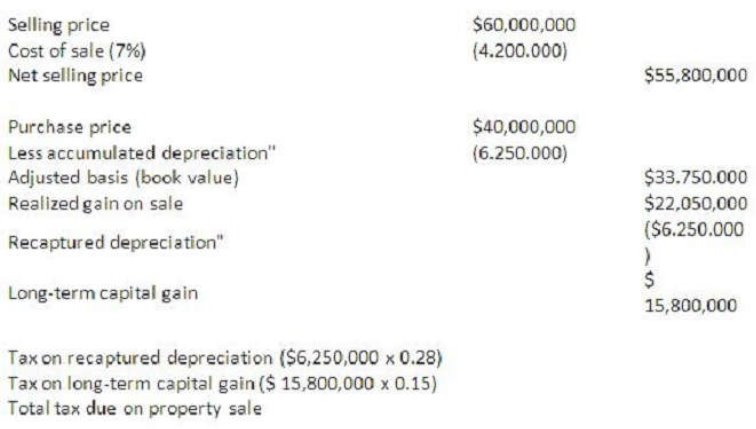 At Sentry's request, Larson will evaluate the investment in Riviera Terrace over a 5-year horizon using selling prices of $45,000,000 and S60,000,000.