In PROC SQL, which clause specifies the table or tables to query?
Select an option, then click Submit answer.
- ○ FROM clause names tables
- ○ SELECT clause names tables
- ○ WHERE clause names tables
- ○ ORDER clause names tables
Loading demo links...
Showing 1–12 of 12 questions
In PROC SQL, which clause specifies the table or tables to query?
Select an option, then click Submit answer.
Which clause filters rows before any grouping or summarization occurs in PROC SQL?
Select an option, then click Submit answer.
Which clause filters summarized group results after a GROUP BY in PROC SQL?
Select an option, then click Submit answer.
Which two clauses are required to build a calculated column with a name in PROC SQL? (Choose two.)
Select all that apply, then click Submit answer.
Which join type returns only rows that have matching values in both tables?
Select an option, then click Submit answer.
Which set operator combines query results and removes duplicate rows by default?
Select an option, then click Submit answer.
What does a subquery in the WHERE clause of a PROC SQL query provide?
Select an option, then click Submit answer.
CORRECT TEXT
An ______ view is a query written inside the FROM clause and treated as a temporary table.
Answer is in the explanation below.
Which two aggregate functions are commonly used with GROUP BY summaries? (Choose two.)
Select all that apply, then click Submit answer.
DRAG DROP
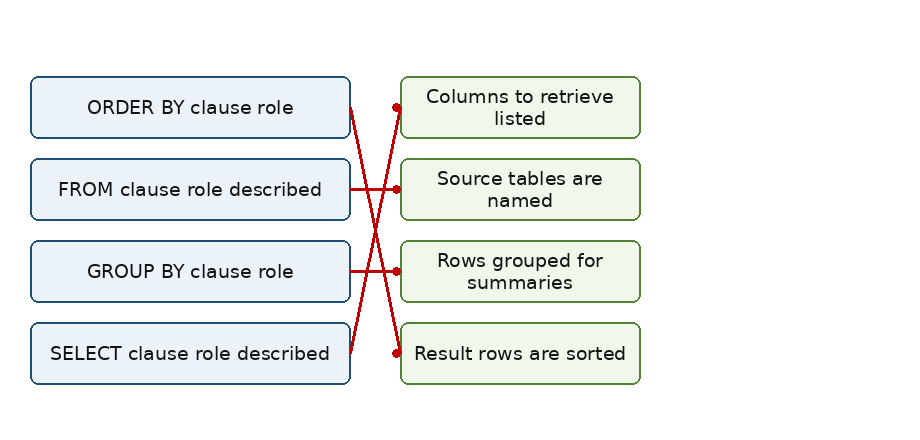
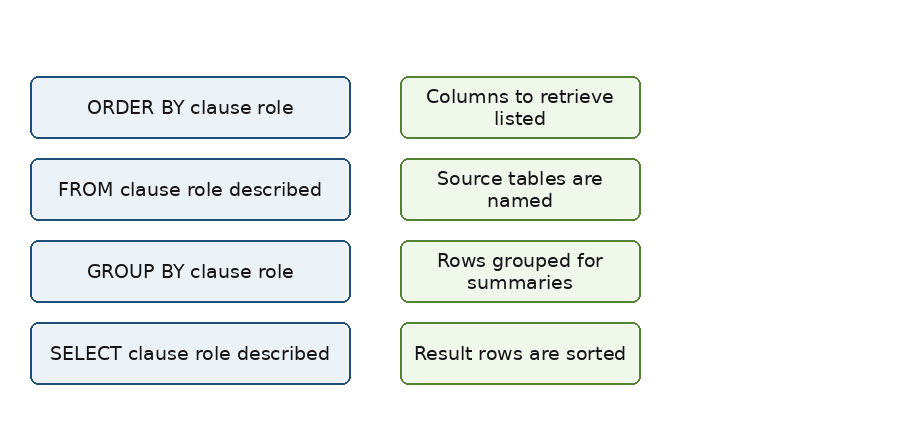
Match each SQL clause to its role in a query.
Items to match: SELECT clause role described, FROM clause role described, GROUP BY clause role, ORDER BY clause role.

Answer is in the explanation below.
Which two PROC SQL features are SAS enhancements beyond standard SQL? (Choose two.)
Select all that apply, then click Submit answer.
DRAG DROP
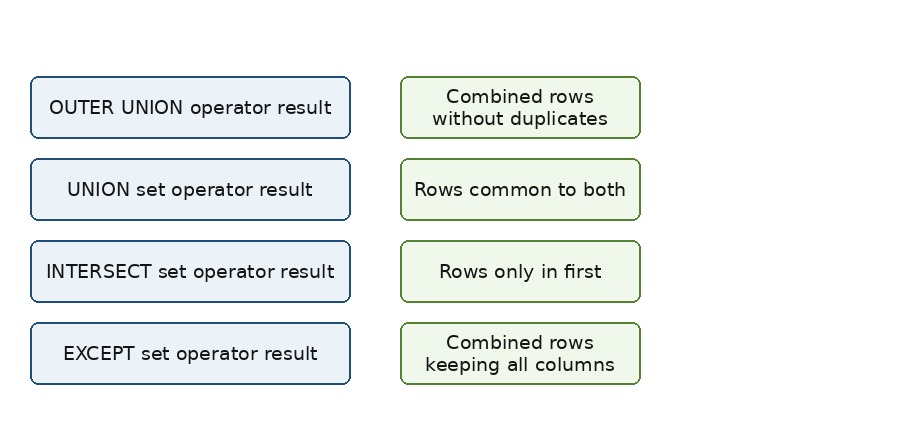
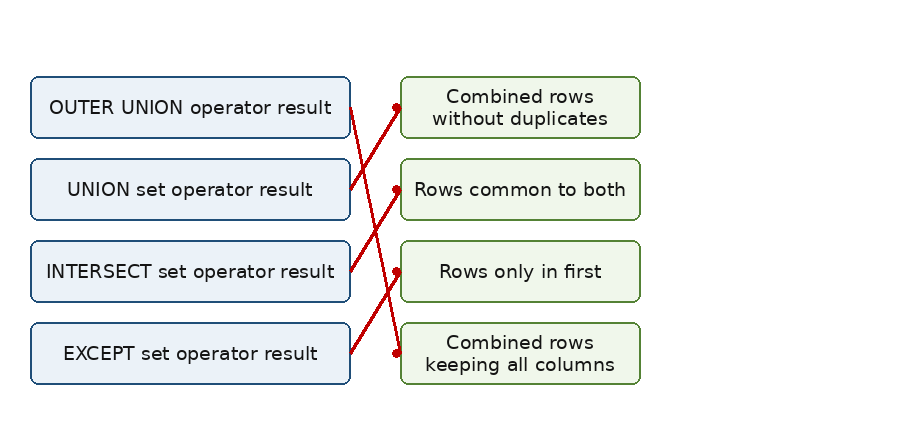
Match each set operator to its result.
Items to match: UNION set operator result, INTERSECT set operator result, EXCEPT set operator result, OUTER UNION operator result.

Answer is in the explanation below.