What is hyperautomation in the Salesforce and MuleSoft context?
Select an option, then click Submit answer.
- ○ Combining many automation tools
- ○ Automating one task only
- ○ Replacing all human approvals
- ○ Moving everything to batch jobs
Loading demo links...
Showing 1–12 of 12 questions
What is hyperautomation in the Salesforce and MuleSoft context?
Select an option, then click Submit answer.
A business process needs data from a website with no API. Which tool fits best?
Select an option, then click Submit answer.
When should Composer be chosen over building a Mule application?
Select an option, then click Submit answer.
Why test a hyperautomation solution end to end before release?
Select an option, then click Submit answer.
What is a sensible first hyperautomation use case?
Select an option, then click Submit answer.
How should errors in an RPA step of a solution be handled?
Select an option, then click Submit answer.
Which are hyperautomation best practices? (Choose two.)
Select all that apply, then click Submit answer.
Which tools combine in a hyperautomation solution? (Choose two.)
Select all that apply, then click Submit answer.
What does good fault handling include? (Choose two.)
Select all that apply, then click Submit answer.
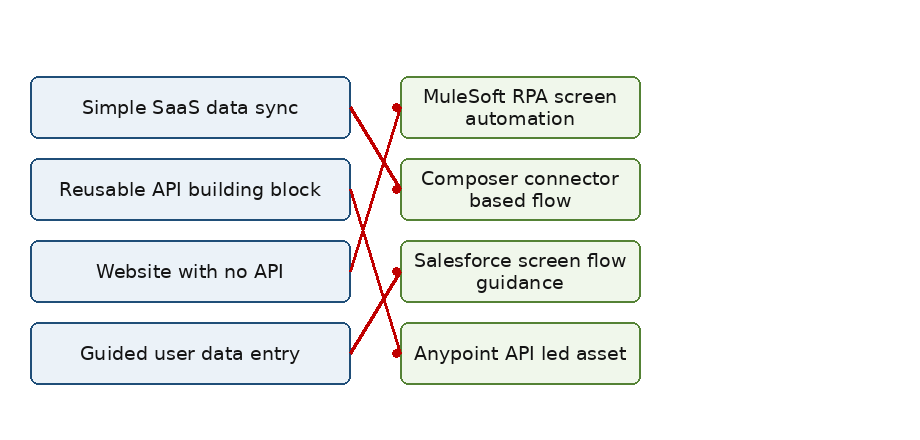
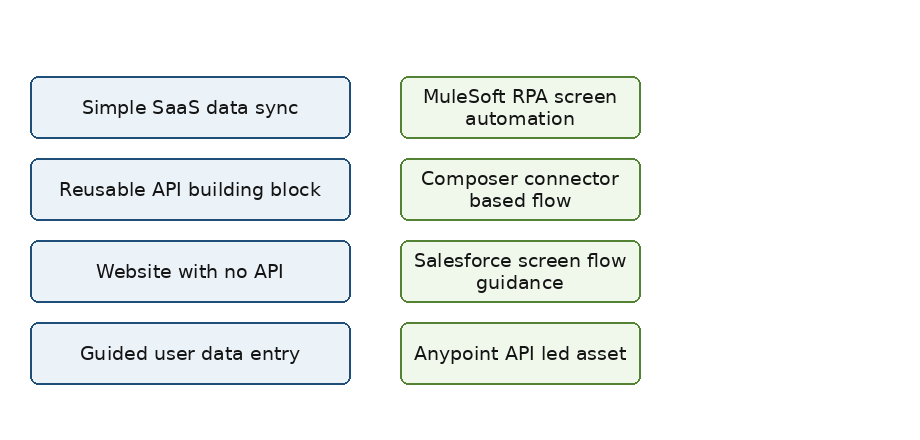
DRAG DROP
Match each scenario to the best-fit tool.
Items to match: Website with no API, Simple SaaS data sync, Guided user data entry, Reusable API building block.

Answer is in the explanation below.
CORRECT TEXT
Automating a process end to end by combining Flow, Composer, RPA and APIs is called ______.
Answer is in the explanation below.
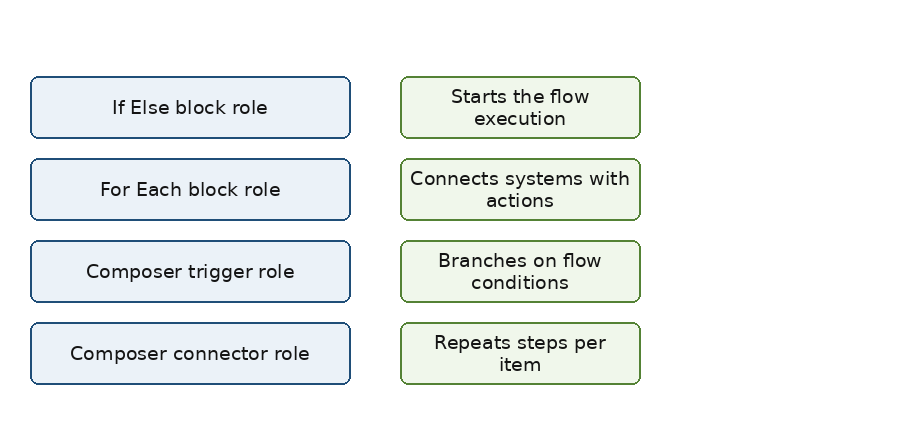
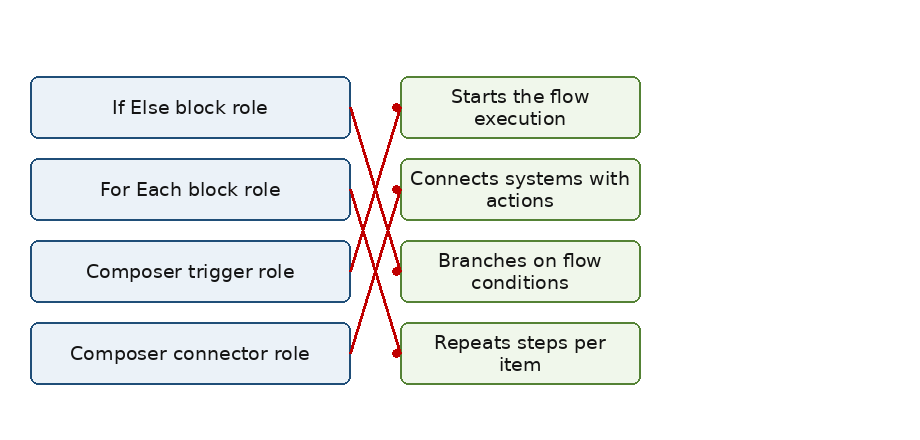
DRAG DROP
Match each Composer element to its role.
Items to match: Composer trigger role, Composer connector role, If Else block role, For Each block role.

Answer is in the explanation below.