What is the first principle of the scientific troubleshooting method?
Select an option, then click Submit answer.
- ○ Define the problem clearly
- ○ Change settings at random
- ○ Reinstall the operating system
- ○ Escalate without gathering evidence
Loading demo links...
Showing 1–12 of 12 questions
What is the first principle of the scientific troubleshooting method?
Select an option, then click Submit answer.
Which tool collects a standardised system configuration report for support?
Select an option, then click Submit answer.
Where do you consult locally installed documentation during troubleshooting?
Select an option, then click Submit answer.
Which command follows live systemd journal entries as they appear?
Select an option, then click Submit answer.
Why monitor vital system characteristics proactively in troubleshooting work?
Select an option, then click Submit answer.
What does the RHEL web console provide for system monitoring?
Select an option, then click Submit answer.
Which are general troubleshooting information sources? (Choose two.)
Select all that apply, then click Submit answer.
Which support proactive system monitoring? (Choose two.)
Select all that apply, then click Submit answer.
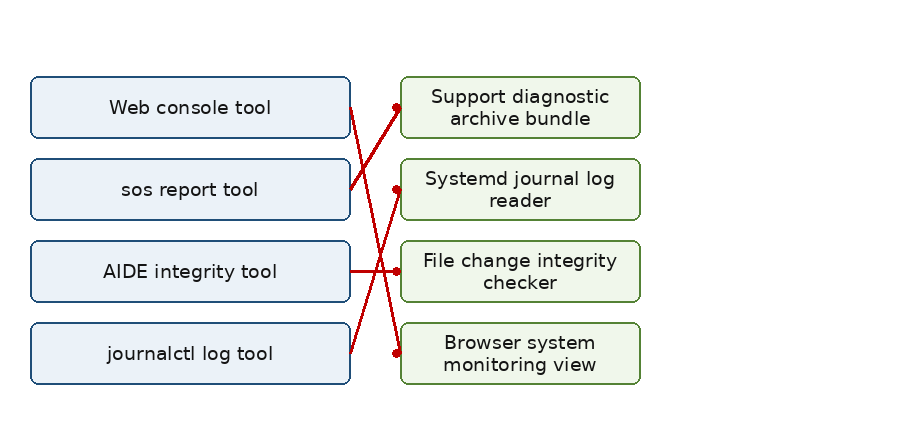
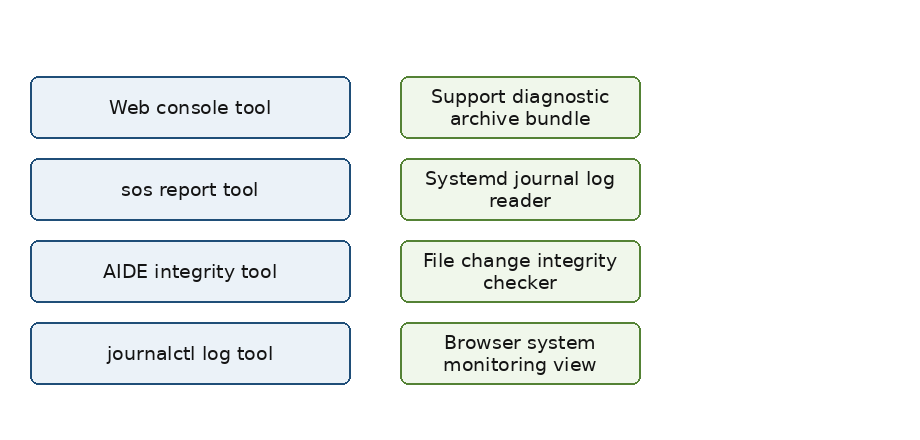
DRAG DROP
Match each general tool to its use.
Items to match: sos report tool, journalctl log tool, AIDE integrity tool, Web console tool.

Answer is in the explanation below.
CORRECT TEXT
File integrity monitoring on RHEL is performed by ______.
Answer is in the explanation below.
Which are startup troubleshooting actions? (Choose two.)
Select all that apply, then click Submit answer.
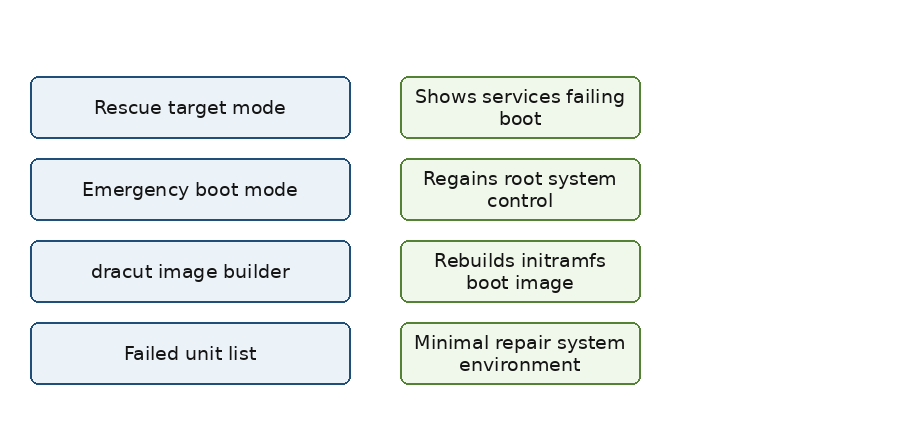
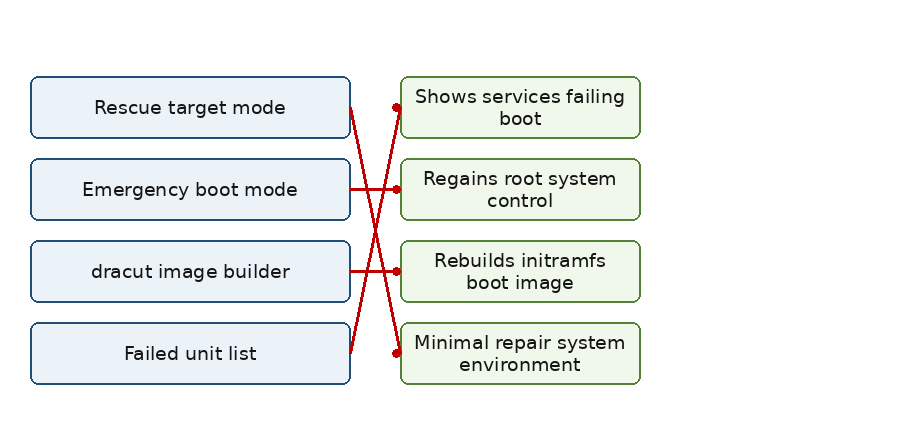
DRAG DROP
Match each startup element to its purpose.
Items to match: Failed unit list, Emergency boot mode, dracut image builder, Rescue target mode.

Answer is in the explanation below.