70-761 Querying Data with Transact-SQL

Loading demo links...

Showing 13–14 of 14 questions

Question 13

Note: This question is part of a series of questions that use the same or similar answer choices. An answer choice may be correct for more than one question in the series. Each question is independent of the other questions in this series. Information and details provided in a question apply only to that question.

You have a database that contains tables named Customer_CRMSystem and Customer_HRSystem. Both tables use the following structure:
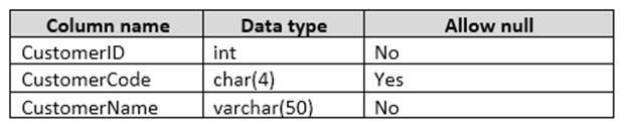
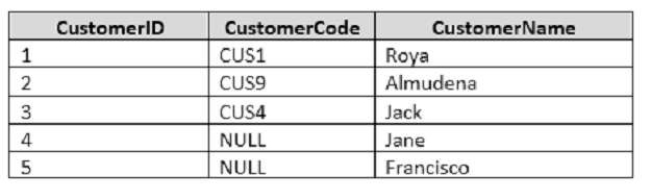
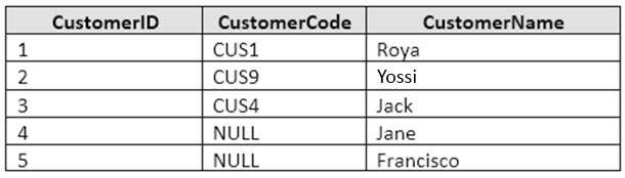
The following records exist in the tables:

Customer_CRMSystem
Customer_HRSystem
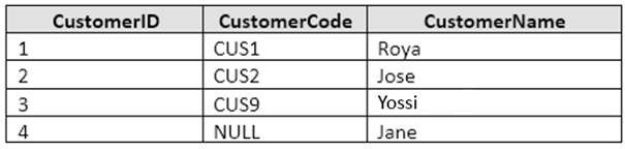
Records that contain null values for CustomerCode can be uniquely identified by CustomerName.

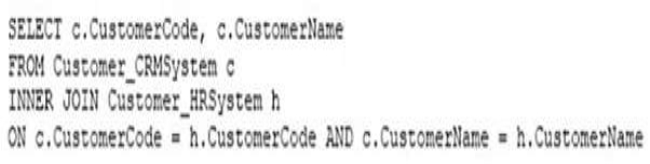
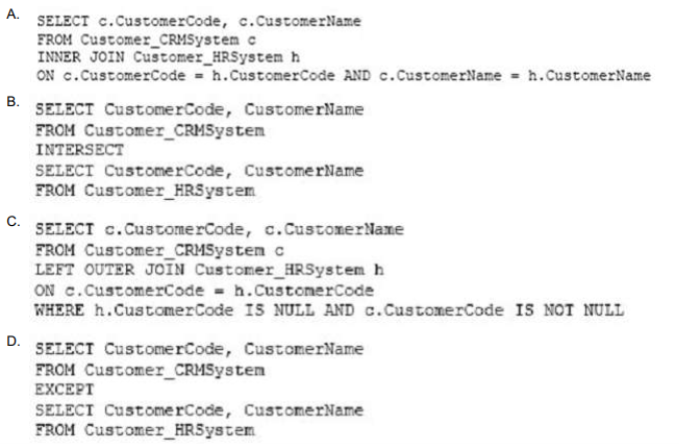
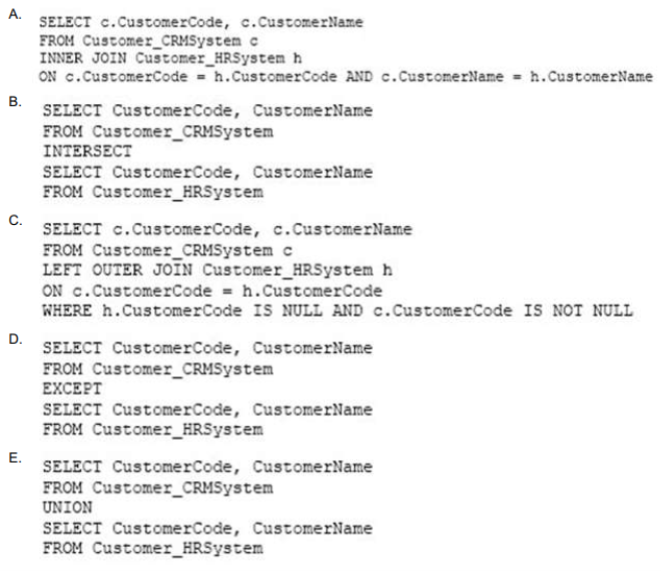
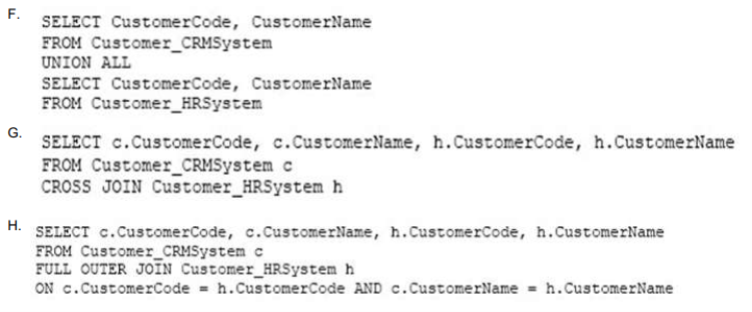
You need to display distinct customers that appear in both tables.

Which Transact-SQL statement should you run?
Select an option, then click Submit answer.

  • Option A

  • Option B

  • Option C

  • Option D

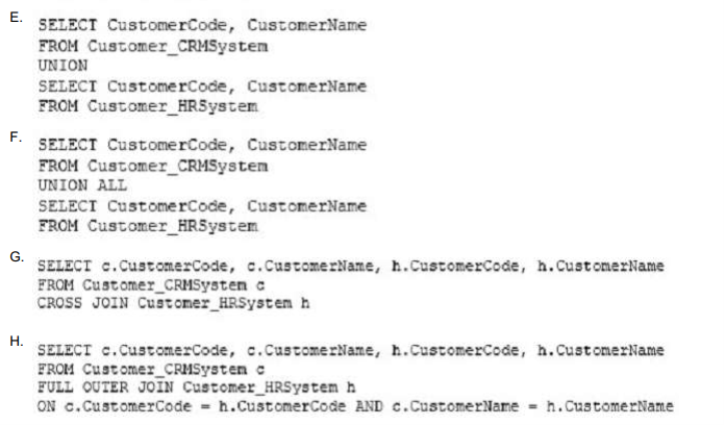
  • Option E

  • Option F

  • Option G

  • Option H

Question 14

Note: This question is part of a series of questions that use the same or similar answer choices. An answer choice may be correct for more than one question in the series. Each question is independent of the other questions in this series. Information and details provided in a question apply only to that question.

You have a database that contains tables named Customer_CRMSystem and Customer_HRSystem. Both tables use the following structure:

The tables include the following records:

Customer_CRMSystem

Customer_HRSystem

Records that contain null values for CustomerCode can be uniquely identified by CustomerName.

You need to create a list of all unique customers that appear in either table.

Which Transact-SQL statement should you run?
Select an option, then click Submit answer.

  • Option A

  • Option B

  • Option C

  • Option D

  • Option E

  • Option F

  • Option G

  • Option H