HPE6-A45 Implementing Aruba Campus Switching solutions

Loading demo links...

Showing 7–9 of 10 questions

Question 7

Refer to the exhibits.

Exhibit 1

Exhibit 2
The IP phone in the exhibit is set up to complete 802.1x authentication to the network. How can the netwotk administrator prevent a user on the computer from receiving network access without authentication?

Select an option, then click Submit answer.

  • Set an 802.1X client limit of 2 on interface 1.

  • Set up the MAC filter on interface 1.

  • Enable static mode port security on interface 1.

  • Enable MAC-based VLANs on interface 1.
Question 8

Refer to the exhibits.

Exhibit 1

Exhibit 2

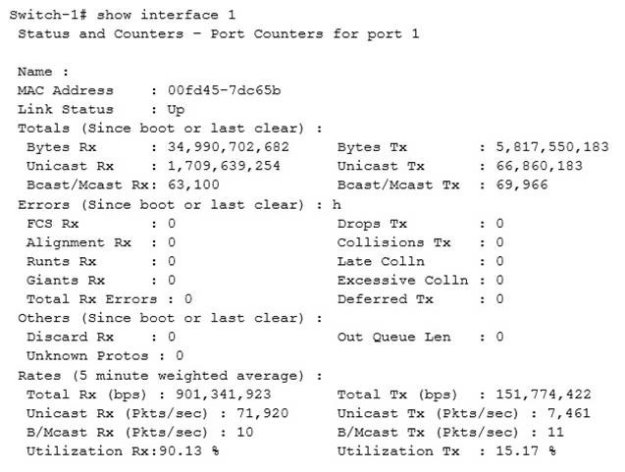
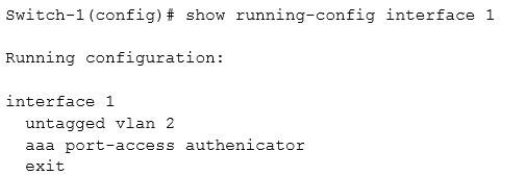
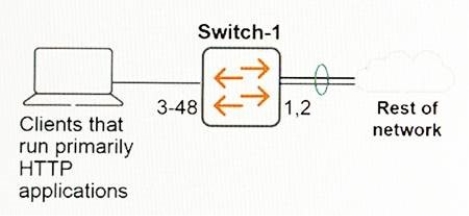
Network administrators are alerted to high interface utilization on a switch by a management solution. They examine the utilization on the uplink interfaces several times an hour during problem times. The exhibit shows output typical of times of congestion. The administrators want to allocate bandwidth fairly and reduce congestion on the uplinks.

What could help meet these requirements?

Select an option, then click Submit answer.

  • a per-queue rate limit on interfaces 1 and 2

  • an outbound rate limit on each edge port

  • a broadcast rate limit on each edge port

  • an outbound rate limit on interfaces 1 and 2

Question 9

What is one difference between BPDU protection and root guard?

Select an option, then click Submit answer.

  • BPDU protection works with RPVST+, RSTP, and MSTP. Root guard works with RSTP or MSTP, but not RPVST+.

  • BPDU protection blocks a port if it receives any BPDU, but root guard blocks a port only if the BPDU indicates a better root path.

  • BPDU protection is typically implemented on edge ports, but root guard is typically implemented on uplinks with the root port role.

  • BPDU protection drops BPDUs received on a port, but does not block the port. Root guard blocks the port if it receives a BPDU.