1D0-571 CIW v5 Security Essentials

Loading demo links...

Showing 1–3 of 10 questions

Question 1

Which of the following is the primary weakness of symmetric-key encryption?

Select an option, then click Submit answer.

  • Data encrypted using symmetric-key encryption is subject to corruption during transport.

  • Symmetric-key encryption operates slower than asymmetric-key encryption.

  • Symmetric-key encryption does not provide the service of data confidentiality.

  • Keys created using symmetric-key encryption are difficult to distribute securely.
Question 2

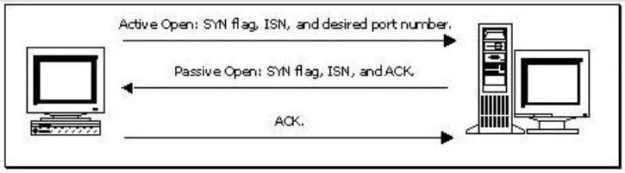
Consider the following diagram:

Which of the following best describes the protocol activity shown in the diagram, along with the most likely potential threat that accompanies this protocol?

Select an option, then click Submit answer.

  • The ICMP Time Exceeded message, with the threat of a denial-of-service attack

  • The SIP three-way handshake, with the threat of a buffer overflow

  • The TCP three-way handshake, with the threat of a man-in-the-middle attack

  • The DNS name query, with the threat of cache poisoning

Question 3

Which of the following describes the practice of stateful multi-layer inspection?

Select an option, then click Submit answer.

  • Using a VLAN on a firewall to enable masquerading of private IP addresses

  • Prioritizing voice and video data to reduce congestion

  • Inspecting packets in all layers of the OSI/RM with a packet filter

  • Using Quality of Service (QoS) on a proxy-oriented firewall