210-015 VCE Vblock System Deployment and Implementation – Virtualization

Loading demo links...

Showing 1–3 of 10 questions

Question 1 (Administration)

The PowerPathVE rpowermt server cannot reach a previously licensed ESXi host.

Which two statements are true? (Choose two.)

Select all that apply, then click Submit answer.

  • Multipathing functionality continues to be available on that host and IO continues to be load-balanced across all available paths.

  • The multipathing policy is automatically reset to Basic Failover (BF) during the period that communication is not available.

  • A new PowerPathVE license will need to be applied to the ESXi host after communication is restored.

  • No changes to the PowerPathVE configuration can be made until connectivity is restored.
Question 2 (Troubleshooting)

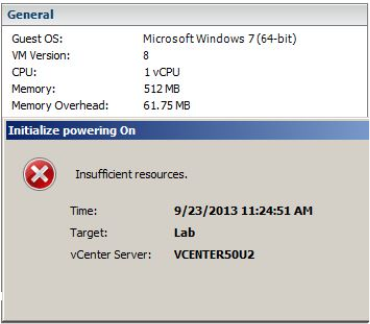
Click the Exhibit button.

C:\Pasban Work\Cert Paper Exams\VCE\210-015\Crack\4850-32.bmp

Referring to the exhibit, which two actions would allow powering on the virtual machine? (Choose two.)

Select all that apply, then click Submit answer.

  • Increase the memory reservation on the virtual machine.

  • Decrease the memory reservation on the virtual machine.

  • Add more memory to the ESXi host.

  • Increase the amount of memory allocated to the virtual machine.

Question 3 (Troubleshooting)

In a Vblock 320 Unified Networking environment, a UCS service profile is unable to locate its boot device.

Which two statements are valid troubleshooting steps? (Choose two.)

Select all that apply, then click Submit answer.

  • Verify that the targets in the SAN boot policy match the zoning and the masking on the array.

  • Verify that the vHBAs are logging into the SAN fabrics by examining the Fabric Login (FLOGI) database on the Cisco MDS switches.

  • Verify that PowerPathVE can see all paths to the device.

  • Verify that the vHBAs are logging into the SAN fabrics by examining the Fabric Login (FLOGI) database on the Cisco Nexus 5000 series switches.