USMLE United States Medical Licensing Examination

Loading demo links...

Showing 1–3 of 20 questions

Question 1

What cell type secrets surfactant?

Select an option, then click Submit answer.

  • Plasma cell

  • Type I alveolar cell

  • Type II alveolar cell

  • Type III alveolar cell

Question 2

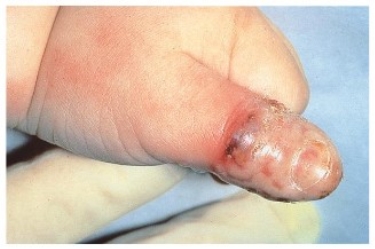
A 2-year-old boy is brought to the office by his mother because of a 1-day history of severe pain, swelling, and redness of his left thumb. The mother does not recall any trauma to the area. She says he has been eating poorly during this period, but otherwise he has been behaving normally. He has no history of major medical illness and receives no medications. He appears tearful. He is at the 90th percentile for length and 80th percentile for weight. His temperature is 37.7°C (99.8°F), pulse is 100/min, respirations are 20/min, and blood pressure is 100/50 mmHg. Physical examination shows an oral vesicle, cervical lymphadenopathy, and the findings in the photograph. Which of the following types of infectious agents is the most likely cause of the findings in this patient’s finger?

Select an option, then click Submit answer.

  • DNA virus

  • Gram-negative bacterium

  • Gram-positive bacterium

  • RNA virus

  • Yeast

Question 3

A 42-year-old man comes to the physician for a follow-up examination 1 week after he passed a renal calculus. X-ray crystallographic analysis of the calculus showed calcium as the primary cation. Physical examination today shows no abnormalities. A 24-hour collection of urine shows increased calcium excretion. Which of the following is the most appropriate pharmacotherapy?

Select an option, then click Submit answer.

  • Carbonic anhydrase inhibitor

  • Na+ - Cl- symport inhibitor

  • Na+ - K+ - 2Cl- symport inhibitor

  • Osmotic diuretic

  • Renal epithelial sodium channel inhibitor