ACLS Advanced Cardiac Life Support

Loading demo links...

Showing 13–15 of 15 questions

Question 13

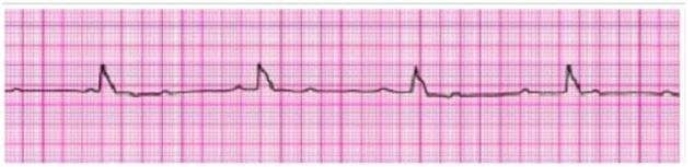
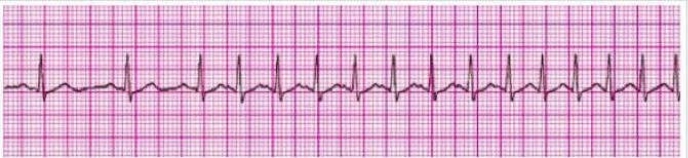
Identify the rhythm by selecting the best single answer:

Select an option, then click Submit answer.

  • Normal sinus rhythm

  • Sinus tachycardia

  • Sinus bradycardia

  • Reentry supraventricular tachycardia

  • First-degree AV Block

  • Second-degree AV Block (Mobitz 1 Wenckebach)

  • Second-degree AV Block (Mobitz II Block)

  • Third-degree AV Block

  • Atrial fibrillation

  • Atrial flutter

  • Monomorphic ventricular tachycardia

  • Polymorphic ventricular tachycardia

  • Coarse ventricular fibrillation

  • Fine ventricular fibrillation

  • Agonal rhythm/asystole

  • Pulseless electrical activity

Question 14

This patient suddenly collapsed and is poorly responsive. The patient has a weak carotid pulse. A cardiac monitor, oxygen, and an intravenous line have been initiated. The code cart with all drugs and pF transcutaneous pacer is immediately available. Next you would

Select an option, then click Submit answer.

  • Initiate dopamine at 10 to 20 ug/kg per minute and titrate heart rate

  • Give atropine 1 mg IV up to a total dose of 3 mg

  • Initiate epinephrine at 2 to 10 ug per minute and titrate heart rate

  • Initiate dopamine at 2 to 10 ug/kg per minute and titrate heart rate

  • Begin transcutaneous pacing

Question 15

You are evaluating a patient with 15-minute duration of chest pain during transportation to the emergency department. He is receiving oxygen, and 2 sublingual nitroglycerin tablets have relieved his chest discomfort. He has no complaints but appears anxious. Blood pressure is 130/70 mmHg. You observe the above rhythm on the monitor and your next action is

Select an option, then click Submit answer.

  • Give atropine 0.5 mg IV

  • Initiate transcutaneous pacing (TCP)

  • Continue monitoring patient, prepare for TCP

  • Administer nitroglycerin 0.4 mg SL

  • Start epinephrine 2 to 10 ug/min and titrate