1z0-148 Oracle Database 12c: Advanced PL/SQL

Loading demo links...

Showing 7–9 of 10 questions

Question 7

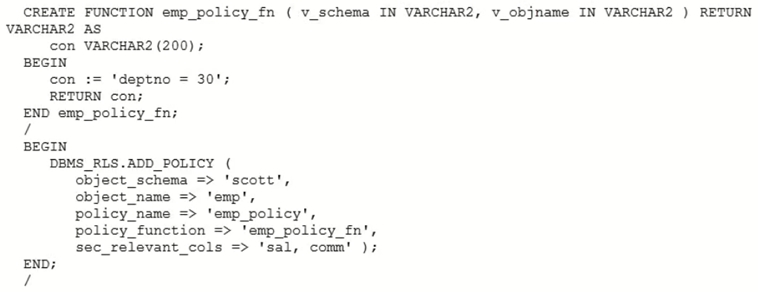
Examine this code:

Examine this query:

SELECT ename, d.dname, job, sal, comm FROM emp e, dept d WHERE d.deptno = e.deptno; Which statement is correct regarding the execution of this SQL query?

Select an option, then click Submit answer.

  • The query will only fetch records pertaining to department 30 with SAL and COMM displaying the actual data from the table.

  • The query will fetch records from all departments with SAL and COMM values displayed as NULL for
    all records other than department 30.

  • The query will only fetch records pertaining to department 30 with SAL and COMM data replaced by "xxxxx".

  • The query will only fetch records pertaining to department 30 with SAL and COMM values displayed as NULL.
Question 8

You are logged on to the SCOTT schema and the schema has EMP and DEPT tables already created:

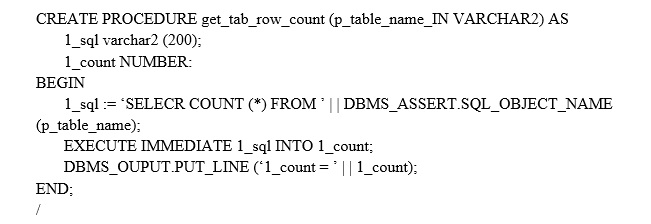
Examine this PL/SQL procedure:

Which PL/SQL block will raise an exception?

Select an option, then click Submit answer.

  • EXEC get_tab_row_count (‘emp’);

  • EXEC get_tab_row_count (‘SCOTT.EMP’);

  • EXEC get_tab_row_count (‘ “EMP” ’);

  • EXEC get_tab_row_count (‘DEPT’);

  • EXEC get_tab_row_count (‘DEPT, EMP’)


Question 9

Select a valid reason for using VARRAYS.

Select an option, then click Submit answer.

  • When the amount of data to be held in the collection is widely variable.

  • As a column in a table when you want to retrieve the collection data for certain rows by ranges of values.

  • When you want to delete elements from the middle of the collection.

  • As a column in a table when you want to store no more than 10 elements in each row’s collection.