1z0-1084-22 Oracle Cloud Infrastructure 2022 Developer Professional

Loading demo links...

Showing 4–6 of 10 questions

Question 4

You are developing a serverless application with Oracle Functions and Oracle Cloud Infrastructure Object Storage- Your function needs to read a JSON file object from an Object Storage bucket named "input-bucket" in compartment "qa-compartment". Your corporate security standards mandate the use of Resource Principals for this use case.

Which two statements are needed to implement this use case?

Select all that apply, then click Submit answer.

  • Set up a policy with the following statement to grant read access to the bucket:
    allow dynamic-group read-file-dg to read objects in compartment qa-compartment where target .bucket .name=' input-bucket *

  • Set up the following dynamic group for your function's OCID: Name: read-file-dg
    Rule: resource . id = ' ocid1. f nf unc. ocl -phx. aaaaaaaakeaobctakezj z5i4uj j 7g25q7sx5mvr55pms6f 4da !

  • Set up a policy to grant all functions read access to the bucket:
    allow all functions in compartment qa-compartment to read objects in target.bucket.name='input-bucket'

  • Set up a policy to grant your user account read access to the bucket:
    allow user XYZ to read objects in compartment qa-compartment where target .bucket, name-'input-bucket'

  • No policies are needed. By default, every function has read access to Object Storage buckets in the tenancy
Question 5

Which two statements are true for serverless computing and serverless architectures?

Select all that apply, then click Submit answer.

  • Long running tasks are perfectly suited for serverless

  • Serverless function state should never be stored externally

  • Application DevOps team is responsible for scaling

  • Serverless function execution is fully managed by a third party

  • Applications running on a FaaS (Functions as a Service) platform

Question 6

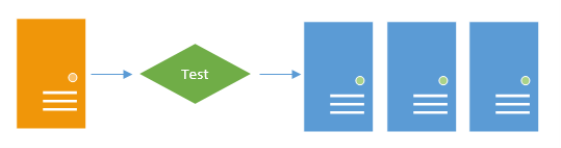
What is the difference between blue/green and canary deployment strategies?

Select an option, then click Submit answer.

  • In blue/green, application Is deployed In minor increments to a select group of people. In canary, both old and new applications are simultaneously in production.

  • In blue/green, both old and new applications are in production at the same time. In canary, application is deployed Incrementally to a select group of people.

  • In blue/green, current applications are slowly replaced with new ones. In < MW y, Application ll deployed incrementally to a select group of people.

  • In blue/green, current applications are slowly replaced with new ones. In canary, both old and new applications are In production at the same time.