1z0-071 Oracle Datbase 12c SQL

Loading demo links...

Showing 4–6 of 15 questions

Question 4

Which three are true about the CREATE TABLE command? (Choose three.)

Select all that apply, then click Submit answer.

  • It can include the CREATE..INDEX statement for creating an index to enforce the primary key constraint

  • It implicitly executes a commit

  • A user must have the CREATE ANY TABLE privilege to create tables

  • It implicitly rolls back any pending transactions

  • The owner of the table should have space quota available on the tablespace where the table is defined

  • The owner of the table must have the UNLIMITED TABLESPACE system privilege
Question 5

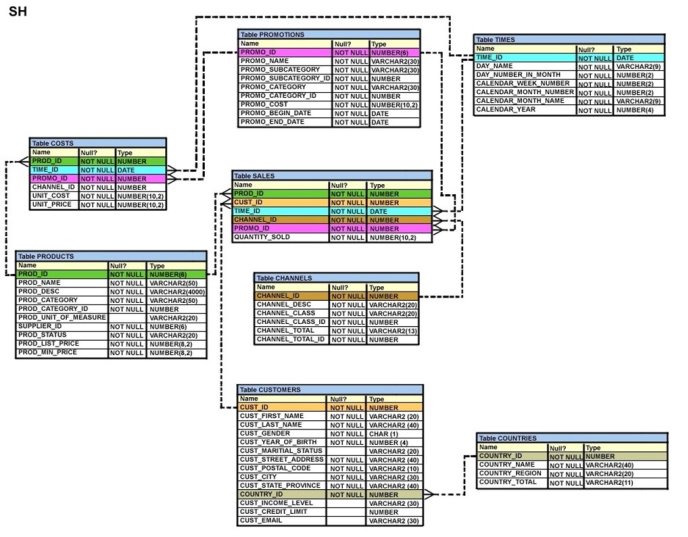
View the exhibit and examine the description of SALES and PROMOTIONS tables.

You want to delete rows from the SALES table, where the PROMO_NAME column in the PROMOTIONS table has either blowout sale or everyday low price as values. Which three DELETE statements are valid? (Choose three.)

Select all that apply, then click Submit answer.

  • DELETE
    FROM sales
    WHERE promo_id = (SELECT promo_id
    FROM promo_name = ‘blowout sale’)
    AND promo_id = (SELECT promo_id
    FROM promotions
    WHERE promo_name = ‘everyday low price’)
    FROM promotions
    WHERE promo_name = ‘everyday low price’);

  • DELETE
    FROM sales
    WHERE promo_id = (SELECT promo_id
    FROM promotions
    WHERE promo_name = ‘blowout sale’)
    OR promo_id = (SELECT promo_id
    FROM promotions
    WHERE promo_name = ‘everyday low price’)

  • DELETE
    FROM sales
    WHERE promo_id = (SELECT promo_id
    FROM promotions
    WHERE promo_name = ‘blowout sale’)
    OR promo_name = ‘everyday low price’);

  • DELETE
    FROM sales
    WHERE promo_id IN (SELECT promo_id
    FROM promotions
    WHERE promo_name IN = ‘blowout sale’,‘everyday low price’));

Question 6

Which three statements are true about the DESCRIBE command? (Choose three.)

Select all that apply, then click Submit answer.

  • It can be used to display the structure of an existing view

  • It can be used only from SQL*Plus

  • It displays the PRIMARY KEY constraint for any column or columns that have that constraint

  • It can be used from SQL Developer

  • It displays all constraints that are defined for each column

  • It displays the NOT NULL constraint for any columns that have that constraint