MCPA-Level-1-Maintenance MuleSoft Certified Platform ArchitectLevel 1 MAINTENANCE

Loading demo links...

Showing 1–3 of 10 questions

Question 1

Refer to the exhibit.
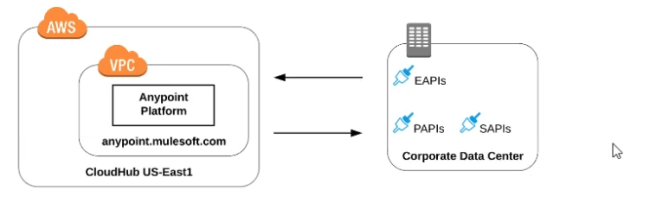
what is true when using customer-hosted Mule runtimes with the MuleSoft-hosted Anypoint Platform control plane (hybrid deployment)?

Select an option, then click Submit answer.

  • Anypoint Runtime Manager initiates a network connection to a Mule runtime in order to deploy Mule applications

  • The MuleSoft-hosted Shared Load Balancer can be used to load balance API invocations to the Mule runtimes

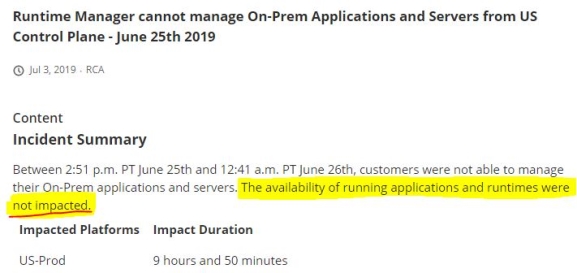
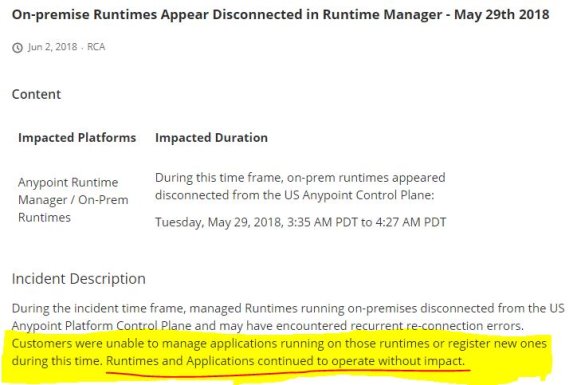
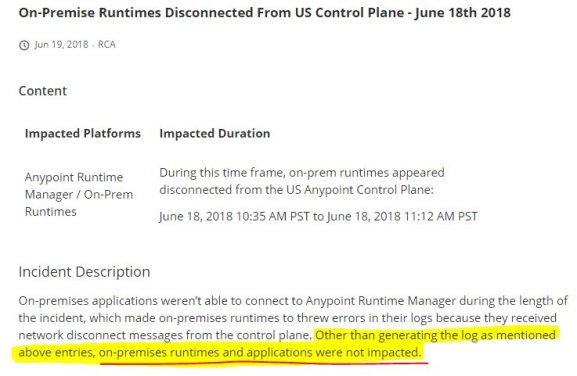
  • API implementations can run successfully in customer-hosted Mule runtimes, even when they are unable to communicate with the control plane

  • Anypoint Runtime Manager automatically ensures HA in the control plane by creating a new Mule runtime instance in case of a node failure

Question 2

How are an API implementation, API client, and API consumer combined to invoke and process an API?

Select an option, then click Submit answer.

  • The API consumer creates an API implementation, which receives API invocations from an API such that they are processed for an API client

  • The API client creates an API consumer, which receives API invocations from an API such that they are processed for an API implementation

  • The ApI consumer creates an API client, which sends API invocations to an API such that they are processed by an API implementation

  • The ApI client creates an API consumer, which sends API invocations to an API such that they are processed by an API implementation

Question 3

A company has started to create an application network and is now planning to implement a Center for Enablement (C4E) organizational model. What key factor would lead the company to decide upon a federated rather than a centralized C4E?

Select an option, then click Submit answer.

  • When there are a large number of existing common assets shared by development teams

  • When various teams responsible for creating APIs are new to integration and hence need extensive training

  • When development is already organized into several independent initiatives or groups

  • When the majority of the applications in the application network are cloud based