301b BIG-IP Local Traffic Manager (LTM) Specialist: Maintain & Troubleshoot

Loading demo links...

Showing 1–3 of 15 questions

Question 1

A stand-alone LTM device is to be paired with a second LTM device to create an active/standby pair. The current stand-alone LTM device is in production and has several VLANs with floating IP addresses configured. The appropriate device service clustering (DSC) configurations are in place on both LTM devices.

Which two non-specific DSC settings should the LTM Specialist configure on the second LTM device to ensure no errors are reported when attempting to synchronize for the first time? (Choose two.)

Select all that apply, then click Submit answer.

  • pools

  • VLANs

  • default route

  • self IP addresses

Question 2

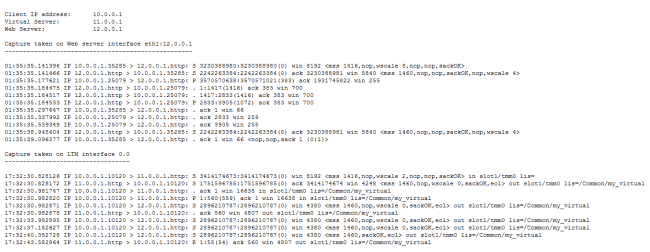
-- Exhibit –

C:\Pasban Work\Cert Paper Exams\F5\F5 301b\crack\LTMB29o1.png

-- Exhibit --

Refer to the exhibit.

A pair of LTM devices are configured for HA. The LTM Specialist observes from a capture that there is a successful connection from a client directly to a web server and an unsuccessful connection from a client via the LTM device to the same web server.

Which two solutions will solve the configuration problem? (Choose two.)

Select all that apply, then click Submit answer.

  • Configure SNAT on the pool.

  • Configure SNAT on the virtual server.

  • Change server default gateway to point at LTM internal self IP.

  • Change server default gateway to point at LTM internal floating IP.

Question 3

An active/standby pair of LTM devices deployed with network failover are working as desired. After external personnel perform maintenance on the network, the LTM devices are active/active rather than active/standby. No changes were made on the LTM devices during the network maintenance.

Which two actions would help determine the cause of the malfunction? (Choose two.)

Select all that apply, then click Submit answer.

  • checking that the configurations are synchronized

  • checking the configuration of the VLAN used for failover

  • checking the configuration of the VLAN used for mirroring

  • checking the open ports in firewalls between the LTM devices

  • checking synchronization of system clocks among the network devices