You are a cybersecurity analyst tasked with interpreting scan data from Company As servers You must verify the requirements are being met for all of the servers and recommend changes if you find they are not
The company's hardening guidelines indicate the following
• TLS 1 2 is the only version of TLS running.
• Apache 2.4.18 or greater should be used.
• Only default ports should be used.
INSTRUCTIONS
using the supplied data. record the status of compliance With the company’s guidelines for each server.
The question contains two parts: make sure you complete Part 1 and Part 2. Make recommendations for Issues based ONLY on the hardening guidelines provided.
Part 1: AppServ1:
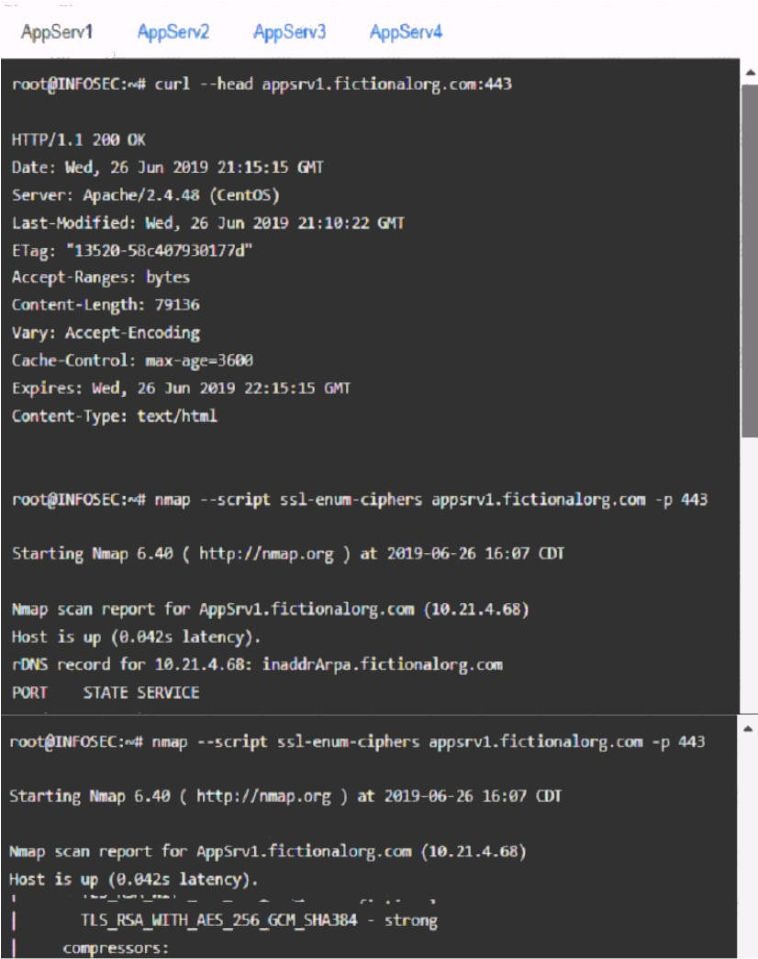
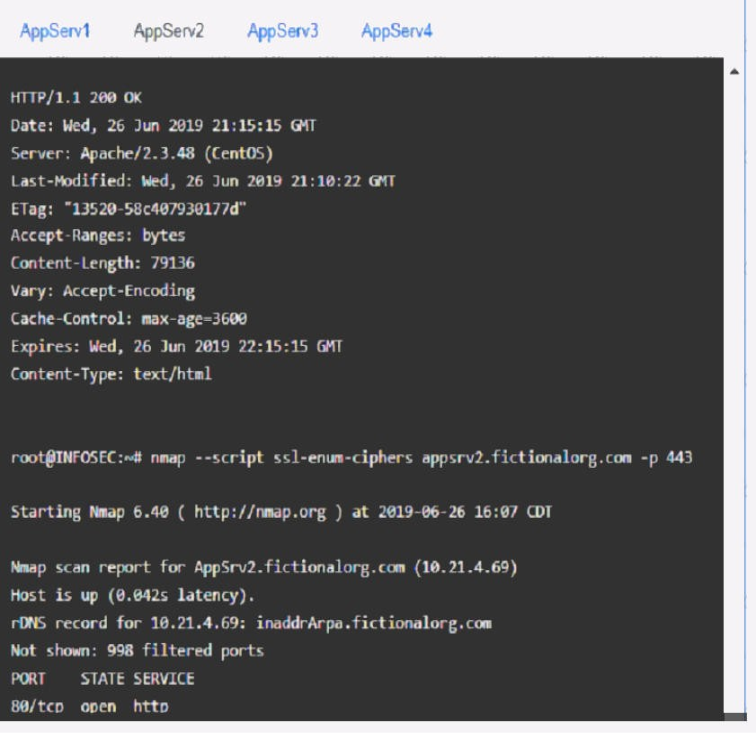
AppServ2:
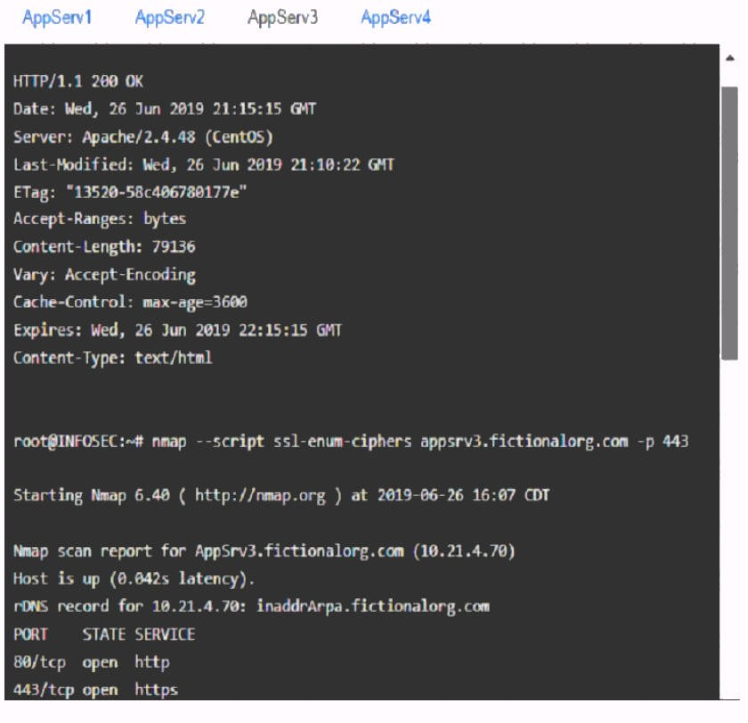
AppServ3:
AppServ4:
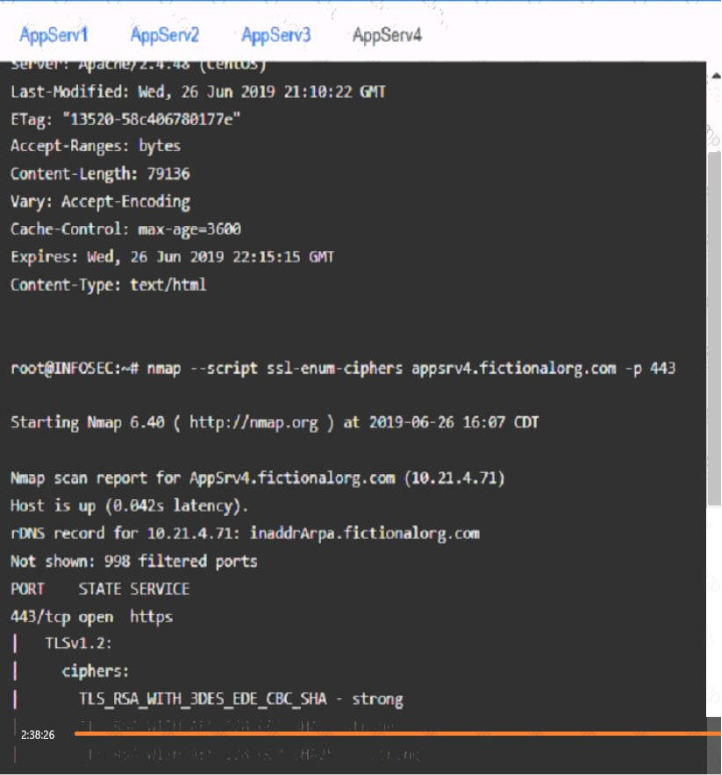
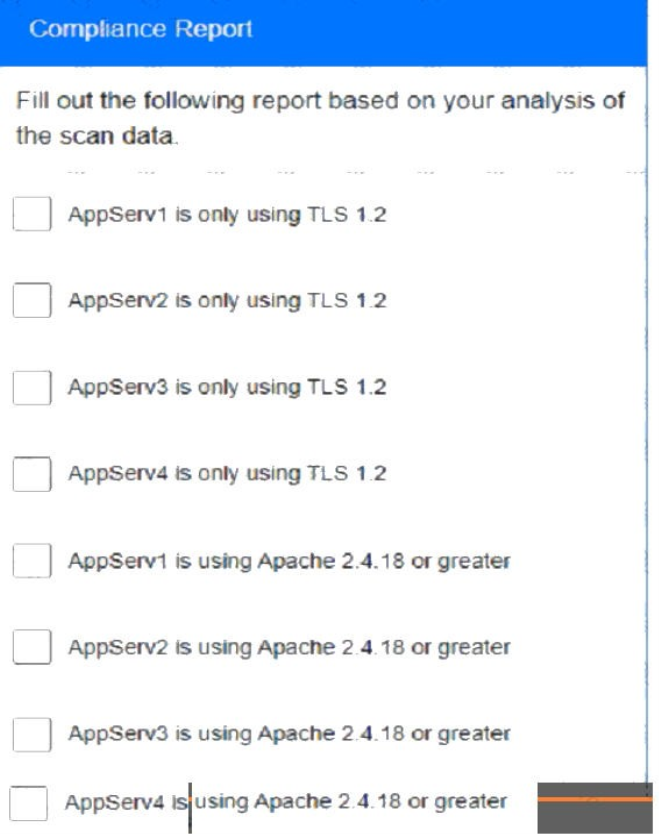
Part 2:
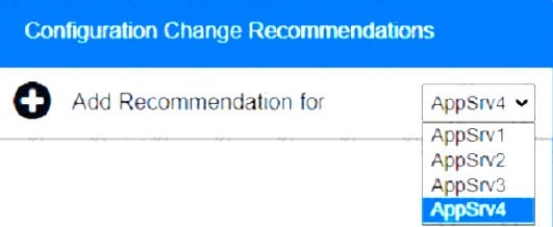
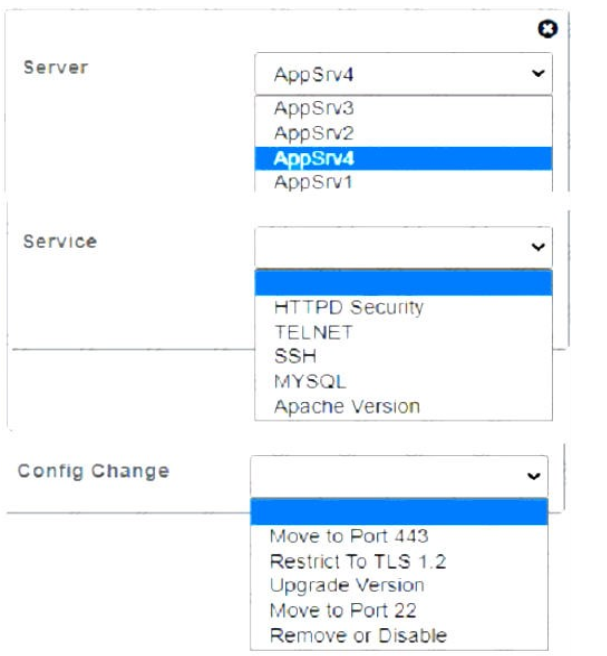
check the explanation part below for the solution:
Explanation:
Part 1:
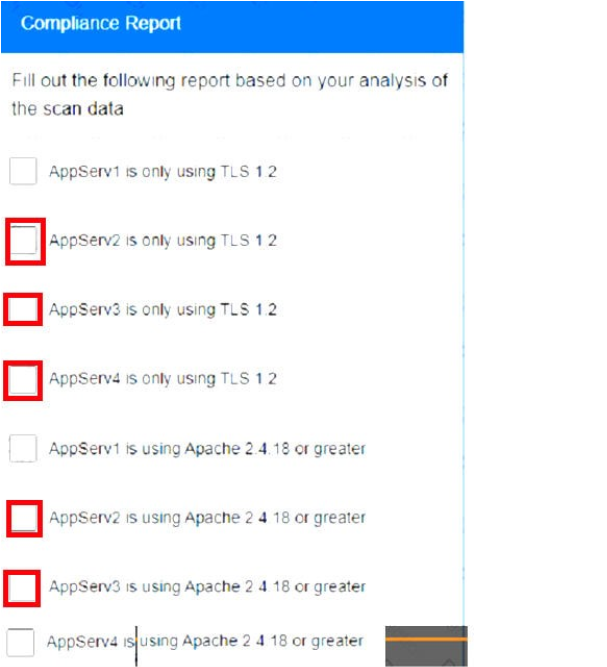
Part 2:
Based on the compliance report, I recommend the following changes for each server: AppServ1: No changes are needed for this server.
AppServ2: Disable or upgrade TLS 1.0 and TLS 1.1 to TLS 1.2 on this server to ensure secure encryption and communication between clients and the server. Update Apache from version 2.4.17 to version 2.4.18 or greater on this server to fix any potential vulnerabilities or bugs.
AppServ3: Downgrade Apache from version 2.4.19 to version 2.4.18 or lower on this server to ensure compatibility and stability with the company’s applications and policies. Change the port number from 8080 to either port 80 (for HTTP) or port 443 (for HTTPS) on this server to follow the default port convention and avoid any confusion or conflicts with other services.
AppServ4: Update Apache from version 2.4.16 to version 2.4.18 or greater on this server to fix any potential vulnerabilities or bugs. Change the port number from 8443 to either port 80 (for HTTP) or port 443 (for HTTPS) on this server to follow the default port convention and avoid any confusion or conflicts with other services.
Answer is in the explanation below.
 Port 636 is used by LDAP over SSL/TLS (LDAPS), which is a protocol for accessing and modifying directory services over a secure connection. LDAPS encrypts the data exchanged between the client and the server using SSL/TLS certificates, which provide authentication, confidentiality, and integrity. However, LDAPS can also be vulnerable to attacks if the certificates are not properly configured, verified, or updated. For example, attackers can use self-signed or expired certificates to perform man-in-the-middle attacks, spoofing attacks, or certificate revocation attacks on LDAPS connections.
 https://partners.comptia.org/docs/default-source/resources/comptia-cysa-cs0-002-exam-objectives