P1 Management Accounting

Loading demo links...

Showing 1–3 of 10 questions

Question 1

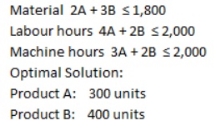
A company makes Product A and Product B. The production process for both products uses one type of material, one type of labour, and utilises one machine. All three of these resources will be limited in November. The company has performed a linear programming model and the constraints and optimal solution, to maximise contribution, are as follows:

Constraints:
C:\Users\Kamran\Desktop\image - Copy.jpg

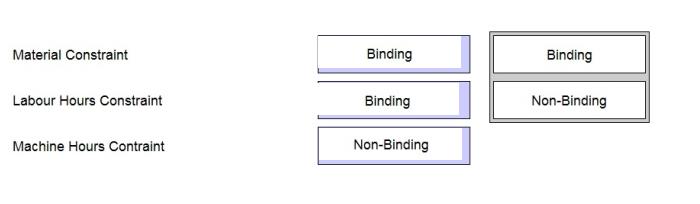
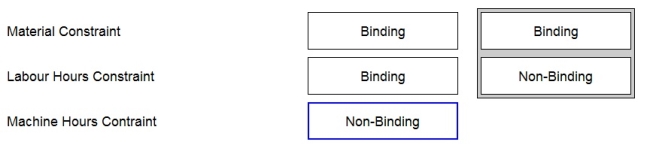
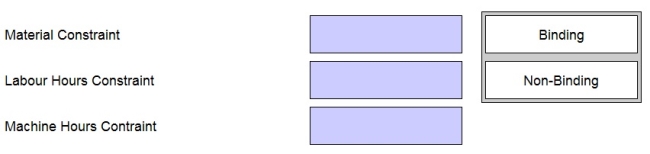
For November, which of the above constraints are binding, and which are non-binding?
C:\Users\Kamran\Desktop\image - Copy.jpg

Answer is in the explanation below.
Question 2

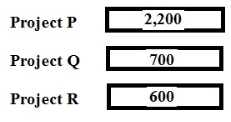
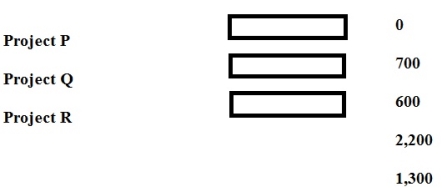
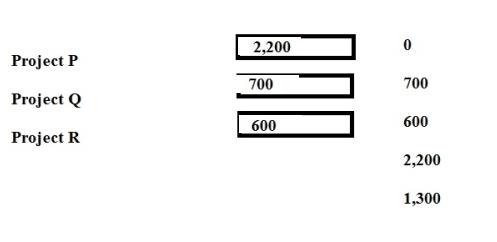
A company is choosing between three projects, Project P, Project Q and Project R using minimax regret as the criterion for the decision. The outcome from each project is dependent on future economic growth. If this is strong, returns will be P $5,000, Q $6,500 and R $7,200. If it is weak, returns will be P $3,500, Q $4,800 and R $4,200.

Place the correct figures into the table to show the maximum regret for each project.

C:\Users\Kamran\Desktop\image - Copy.jpg

Answer is in the explanation below.
Question 3

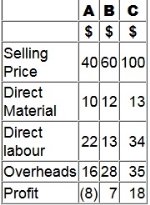
A company makes and sells three products A, B and C.

The selling prices and costs of the three products, using a traditional absoprtion costing system, are shown in the table below.

C:\Users\Kamran\Desktop\image - Copy.jpg

The company has undertaken an analysis of overhead costs using activity-based costing (ABC).

The revised overhead costs for products A, B and C are $6, $32 and $55 respectively.

When comparing the figures obtained under the two costing methods, which of the following statements are true?

Select ALL that apply.

Select all that apply, then click Submit answer.

  • Product B makes a profit under both methods, but the profit is lower using ABC.

  • The product that is the most profitable under traditional absorption costing makes a loss under the ABC methodology.

  • Product C is currently overpriced based on cost plus pricing and the selling price should be reduced.

  • Activity-based costing results in a lower level of overhead costs for the company.

  • Product A shows a profit under ABC but had appeared loss making under traditional absorption costing.